
Source attribution
A variety of methods are available to attribute foodborne diseases to the main transmission pathways and further to specific food sources, including approaches based on analysis of data from occurrence and epidemiological studies, intervention studies, and expert elicitations.
For the 2026 Edition, the Foodborne Disease Burden Epidemiology Reference Group (FERG) for 2021-2025, in particular the Source Attribution Task Force (SATF), advised WHO to newly conduct the global source attribution study. Based on the open call, WHO has selected and commissioned the Delft Institute of Applied Mathematics at the Delft University of Technology to lead the study in close collaboration with WHO and FERG/SATF, and a number of experts have been recruited to participate in the study (public call for experts dated July 2023). The results are available in the preprint manuscripts:
- Pires SM, Mughini‑Gras L, Hoffmann S, Kubota K, Majowicz S, Kirk M, et al. World Health Organization attribution of burden of foodborne diseases to transmission pathways and foods. Research Square [preprint]. 2026; Version 1. (https://www.researchsquare.com/article/rs-9449162/v1).
- Nane GF, Hald T, Aspinall W, Cooke RM, Havelaar A, Minato Y, et al. Structured Expert Judgment Findings Informing World Health Organization Foodborne Disease Estimates 2026 [report]. 2026; (https://doi.org/10.4233/uuid:c85720e4-1720-479b-abbf-4e9d5ff3a7b3).
For more information on the source attribution methodology, please see the related WHO webinar held on 5 November 2024.
Subregional estimates of the mean proportion of foodborne transmission per respective hazards.This dataset consists of attributions for 28 hazards to illness, deaths, and disability-adjusted life years based on a structured expert judgment study guided by hazard experts and available empirical data. Attribution for one hazard (Echinococcus granulosus) was obtained from systematic review and meta-analysis.
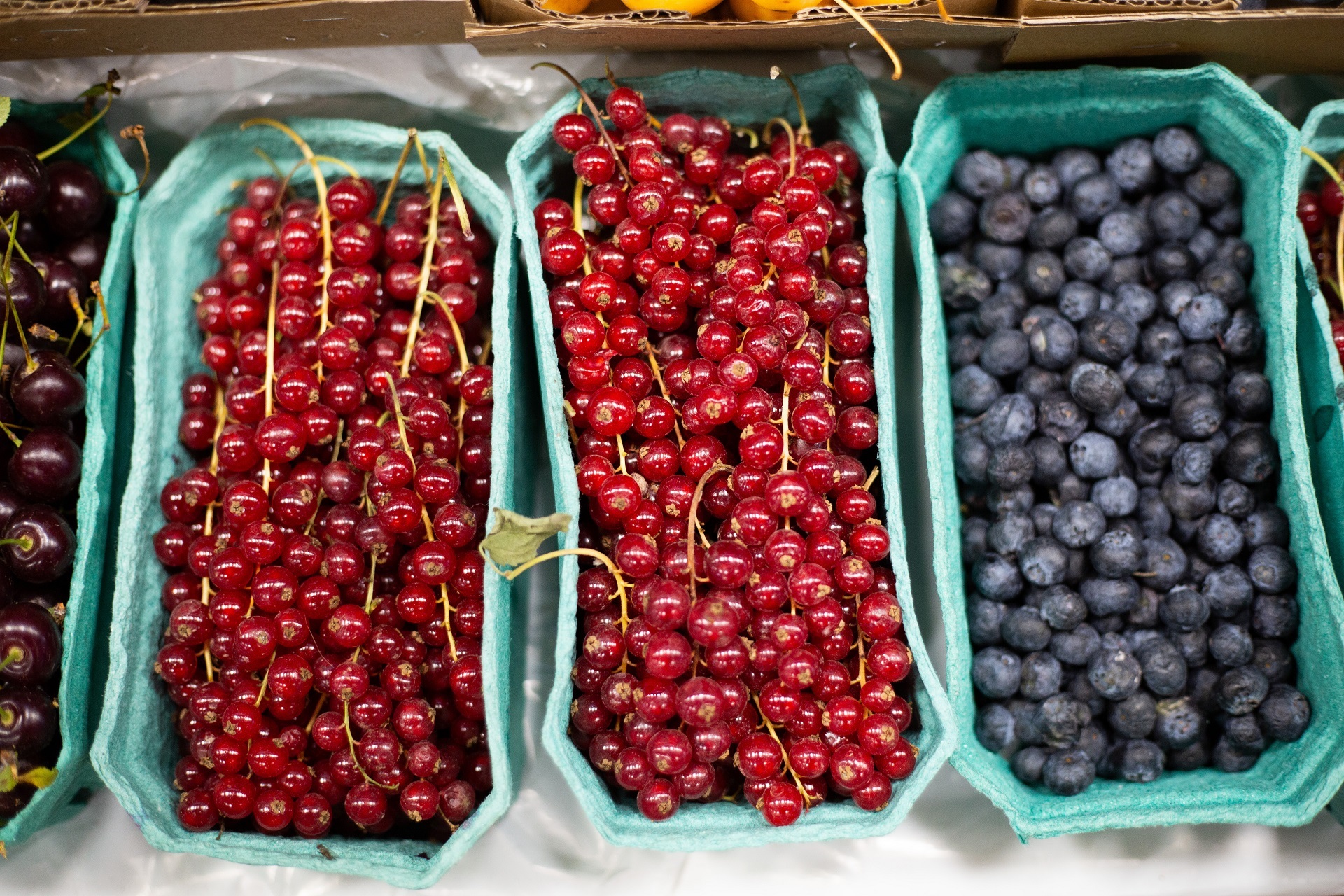
Berries on display at Yaşil Bazar in Baku, Azerbaijan
Other relevant publications
Davydova, A., C. Fastl, L. Mughini-Gras, L. Bai, K. Kubota, S. Hoffmann, T. Rachmawati and S. M. Pires (2025). "Source attribution studies of foodborne pathogens, 2010–2023: a review and collection of estimates." Food Microbiology 131: 104812. https://doi.org/10.1016/j.fm.2025.104812